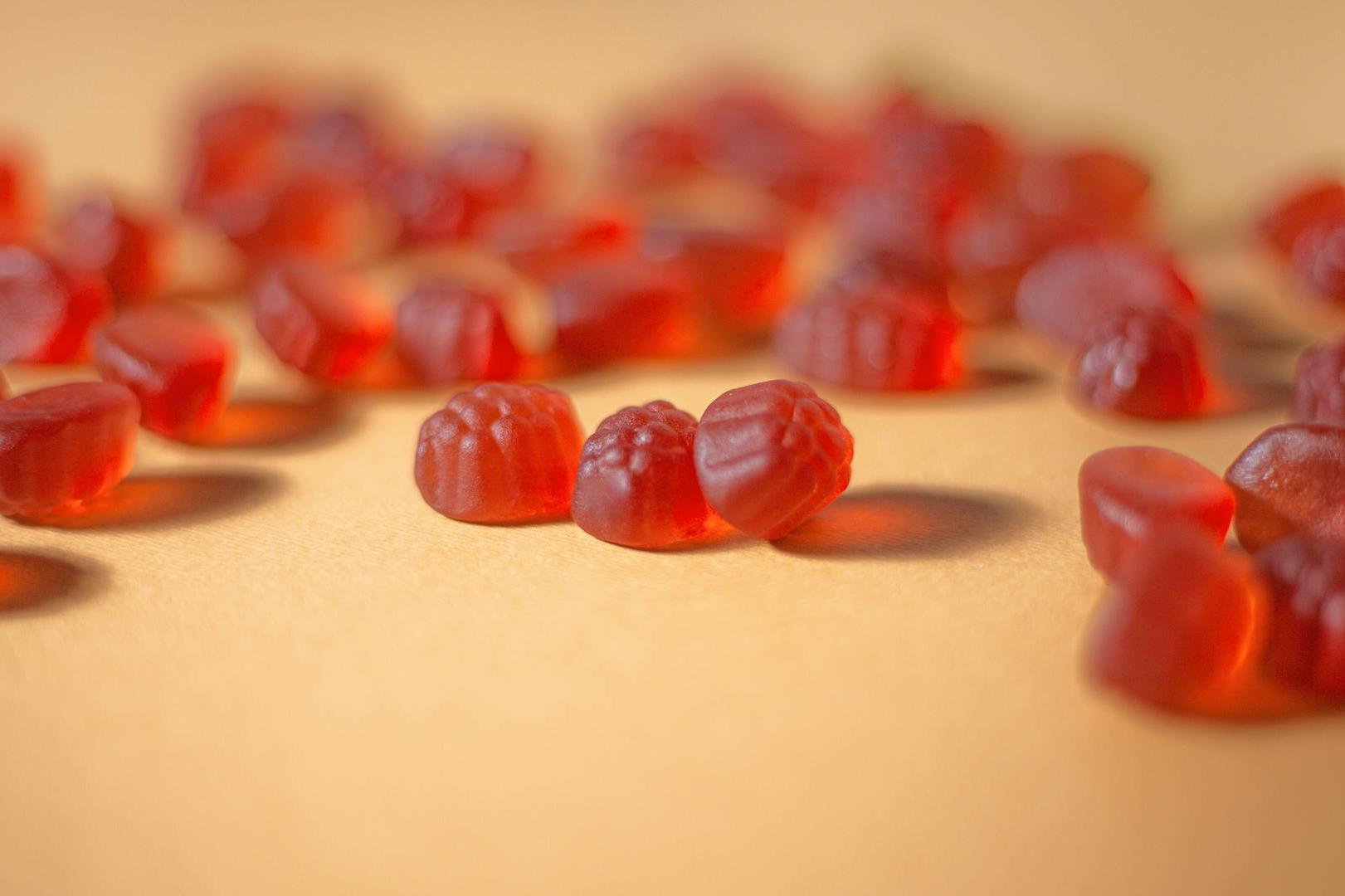
White label gummies are the fastest way for a brand to get a finished, sellable supplement to market without funding formulation from scratch. You start from a proven base formula, apply your branding, and ship. For a brand adding a gummy SKU to a line built on capsules and powders, that head start can mean weeks to launch instead of the six to nine months a fully custom formulation usually takes. The trade-off is real, and worth understanding before you commit, but for most brands the math favors moving fast on a format that consumers already reach for.
The gummy category keeps pulling spend away from pills for a simple reason: people take what they enjoy. A gummy gets eaten when a capsule gets skipped, which means better adherence and more reorders. That is why brands across vitamins, apple cider vinegar, sleep, and beauty keep adding gummy formats, and why white label is the on-ramp that makes the move affordable.
White label means the manufacturer has already developed and validated the formula, and you put your brand on it. Several brands can sell versions of the same base product, differentiated by branding, flavor, and packaging. Private label sits a step closer to custom, where a formula is made for you and not offered to others. Fully custom means you commission a new formulation, file the specs, and run stability testing before a single bottle ships.
The reason this distinction matters is cost and speed. With white label gummies, the expensive, time-consuming work, formulation, palatability testing, and stability validation, is already done. You skip the R&D budget line entirely and inherit a formula that has already cleared manufacturing and shelf-life hurdles. A custom gummy can carry tens of thousands of dollars in development and testing before production even begins. White label removes that barrier, which is exactly why it suits a brand validating a concept or one that wants a clean, predictable launch.
That does not mean a generic product. A good white label program gives you meaningful control over how the finished gummy looks, tastes, and reads on the label, while keeping the underlying formula proven.
A gummy is a deceptively technical product. The base is built on a gelling system, either gelatin or a plant-based pectin, that determines texture, chew, melt resistance, and whether the product qualifies as vegan. Pectin behaves differently from gelatin under heat and acid, so the choice affects shelf stability and how the gummy holds up in a hot shipping container or a warm store shelf. Active ingredients have to survive the cooking and depositing process, which runs hot, and many actives degrade or shift flavor under that stress. That is why overage calculations, masking systems, and ingredient form matter so much. A formula that looks fine on paper can fall apart in production if the actives were not accounted for correctly.
This is the part of gummy manufacturing that buyers underestimate. Anyone can promise a flavor. Delivering a stable, accurately dosed gummy that still hits its label claim at the end of an 18- or 24-month shelf life is the hard part, and it is where a manufacturer's formulation experience shows. Eagle Labs produces gummies alongside capsules, tablets, liquids, and stick packs, so the recommendation you get is based on what actually performs in the format.
Within a white label program you can typically adjust flavor, color, gummy shape, dietary positioning (vegan, sugar-reduced, organic), and the full label and packaging. You can read more about how gummies fit into a broader product range, and how flexible packaging options round out a finished, retail-ready SKU.
The strength of a white label launch is that customization happens at the layers that drive purchase decisions without touching the validated core. Flavor and color shift the sensory experience. Shape and packaging carry the brand. The Supplement Facts panel, claims, and design make the product yours on the shelf and in a search result.
Where brands get into trouble is treating cosmetic customization and formula changes as the same thing. Swapping a flavor system is straightforward. Changing an active dose, adding a new ingredient, or moving from gelatin to pectin is a formulation change that can require fresh stability testing and a new production validation. A manufacturer worth partnering with will tell you which bucket your request falls into, and what it does to timeline and minimum order. The ones to avoid are the ones that say yes to everything and sort out the consequences later.
The obvious comparison is overseas manufacturing on the lowest bid. The sticker price looks better until you account for what it actually costs. Long lead times and ocean freight tie up cash and make reorders slow. Quality drift between batches shows up as customer complaints. And the certification picture is often murky, with "GMP-compliant" claims that are self-attested rather than verified by an independent auditor. When a retailer or marketplace asks for documentation, self-attested claims do not hold up the way third-party certification does.
Domestic white label closes that gap. Shorter, more predictable lead times mean you reorder on demand instead of forecasting six months out. Batch-to-batch consistency protects the reviews and reorders your brand lives on. And U.S.-based, audited manufacturing gives you documentation that survives scrutiny from retailers, marketplaces, and regulators. The lowest bid is rarely the lowest total cost once a failed batch, a stockout, or a compliance flag enters the picture.
Before you sign, the questions you ask separate a real manufacturing partner from a broker reselling someone else's production. Put these on the table:
The answers tell you whether you are buying a finished, supported product or a problem you will inherit later.
The smart launch is sized to real demand. Because a white label formula has already been validated, the open question is volume, and your first order should match what your sales channel can realistically move. The bigger risk is partnering with a manufacturer that cannot scale with you, which forces a painful migration just as your product is gaining traction.
The fix is to choose a partner whose capacity matches your ambition from the start. Eagle Labs runs white label gummies at production scale, with minimums starting at 1,000,000 units on lines that produce up to 2 million gummies per day. Once a product proves out, scaling up should be a volume conversation, not a relationship change. Pairing that with in-house fulfillment and eCommerce consulting keeps the operational side from becoming the bottleneck as orders grow.
The differentiator that matters most in this category is verified certification. Eagle Labs is a U.S.-based contract manufacturer holding the full NSF/ANSI 455 family, including 455-2 for supplement GMP and 455-3 for cosmetic GMP, across multiple facilities, which is unusual in the industry. That sits alongside FDA registration, USDA NOP Organic certification, Halal certification, and Health Canada registration. These are audited, third-party-verified standards, not self-declared claims, which is the line that holds up when a retailer or marketplace asks for proof. You can review the full list on the certifications page, and see how that quality system runs through manufacturing you can trust.
For a brand, that combination, proven formulas, real customization, domestic production, and certification that survives an audit, is what turns a fast launch into a durable product line.
White label gummies use a manufacturer's existing, proven formula that you brand as your own, and the same base may be sold to other brands. Private label is closer to custom: a formula made specifically for you. White label is faster and cheaper to launch; private label gives more exclusivity.
Because the formula is already developed and validated, launch comes down to customization, label approval, and packaging. That timeline is typically weeks rather than the six to nine months a fully custom gummy formulation can take.
At Eagle Labs, white label gummy minimums start at 1,000,000 units. Ask any manufacturer for its minimum in both gummies and finished bottles before you commit.
Yes. Vegan gummies use a pectin gelling system instead of gelatin, and sugar-reduced versions use alternative sweetening systems. Confirm which of these are available within the white label program versus requiring a formulation change.
They can be, and choosing a domestic manufacturer brings shorter lead times, more consistent batches, and certification documentation that holds up under scrutiny. Eagle Labs manufactures gummies in the U.S. under audited NSF/ANSI 455 GMP certification.
Yes, if you choose a manufacturer built for it. A partner with full production capacity lets you scale on volume without changing manufacturers as demand grows.
Read More